
Cultural Competence
Despite notable progress in the overall health of Americans, there are continuing disparities in health status among African Americans, Hispanics, Native Americans, and Pacific Islanders, compared to the U.S. population as a whole. In addition, the health care system is becoming more challenged as the population becomes more ethnically diverse. Therefore, the future health of the U.S. population as a whole will be influenced substantially by improvements in the health of racial and ethnic minorities.
Cultural, ethnic, linguistic, and economic differences impact how individuals and groups access and use health, education, and social services. They can also present barriers to effective education and health care interventions. This is especially true when health educators or health care practitioners stereotype, misinterpret, make faulty assumptions, or otherwise mishandle their encounters with individuals and groups viewed as different in terms of their backgrounds and experiences. The demand for culturally competent health care in the United States is a direct result of the failure of the health care system to provide adequate care to all segments of the population.
Cultural Competence, Cultural Sensitivity, and Culturally Effective Health Care
The term cultural competence refers to the ability to work effectively with individuals from different cultural and ethnic backgrounds, or in settings where several cultures coexist. It includes the ability to understand the language, culture, and behaviors of other individuals and groups, and to make appropriate recommendations. Cultural competence exists on a continuum from incompetence to proficiency.
Cultural sensitivity, which is a necessary component of cultural competence, means that health care professionals make an effort to be aware of
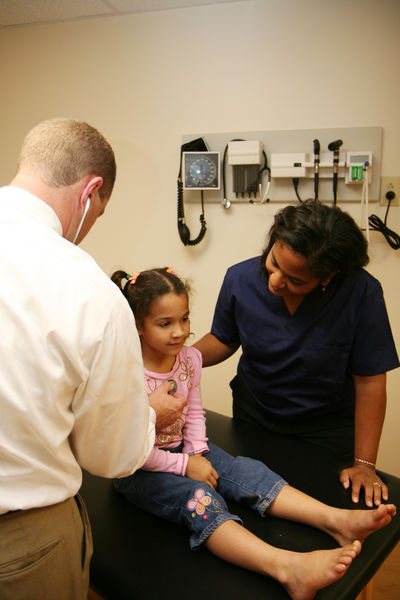
![Cultural competence cannot be achieved through short workshops or classes. A long-term commitment is required to learn a second language and become familiar with other cultures to deliver effective health care for the ethnically diverse U.S. population. [AP/Wide World Photos. Reproduced by permission.]](../images/nwaz_01_img0066.jpg)
The terms cultural competence and culturally effective health care are sometimes used synonymously. Culturally effective health care is, indeed, related to cultural competence and cultural sensitivity. However, it goes beyond these concepts in describing the dynamic relationship between provider and client. Effective communication between providers and clients may be even more challenging when linguistic barriers exist.
Becoming Culturally Competent
Cultural competence is a developmental process that requires a long-term commitment. It is not a specific end product that occurs after a two-hour workshop, but it is an active process of learning and practicing over time. Becoming culturally competent is easier to talk about than to accomplish. Individuals working with different ethnic and cultural groups can become more culturally competent by advancing through three main stages: developing awareness, acquiring knowledge, and developing and maintaining cross-cultural skills.
Developing Awareness.
Developing cultural awareness includes recognizing the value of population diversity . It also means an honest assessment of one's biases and stereotypes.
Acquiring Knowledge.
One can never learn everything about another culture. However, acquiring knowledge about other groups is the foundation of cultural competence. In addition to understanding other cultures, it is essential to understand how different cultural groups view one's own culture. Knowledge of another culture includes assessments of facts not only about relevant norms, values, worldviews, and the practicality of everyday life, but also about how one's culture and the services one provides are viewed.
Developing and Maintaining Cross-Cultural Skills.
Even though the United States is a pluralistic society, most health professionals have been trained in a monocultural tradition. In addition, many continue to practice as if ethnic and cultural differences are insignificant. Cross-cultural skills are developed through formal coursework, informal interaction and networking, and experience.
Organizational Responsibilities
It is important for health care organizations and professional preparation programs to articulate a commitment to cultural competence and to initiate cultural-competence initiatives. Many organizations are getting social and legal pressures to do this from different segments of the population. In addition to the social impact of diversity, these organizations are beginning to realize that a commitment to diversity makes good business sense.
Professional preparation programs can play a significant role in providing the knowledge and skills for culturally competent health professionals. These programs can provide courses and other formats developed with the sole purpose of addressing cultural competence and/or cultural sensitivity. They also can provide specific educational components on cultural competence and/or cultural sensitivity within the curricula, internship and residency programs, continuing education programs, and in-service programs. Organizations need to go beyond educating their employees and providing workshops on cultural sensitivity, however. They must also change institutional policies and procedures.
Steps to Becoming Culturally Competent
Developing Awareness
- Admitting personal biases, stereotypes, and prejudices
- Becoming aware of cultural norms, attitudes, and beliefs
- Valuing diversity
- Willingness to extend oneself psychologically and physically to the client population
- Recognizing comfort level in different situations
Acquiring Knowledge
- Knowing how your culture is viewed by others
- Attending classes, workshops, and seminars about other cultures
- Reading about other cultures
- Watching movies and documentaries about other cultures
- Attending cultural events and festivals
- Sharing knowledge and experiences with others
- Visiting other countries
Developing and Maintaining Cross-Cultural Skills
- Making friends with people of different cultures
- Establishing professional and working relationships with people of different cultures
- Learning another language
- Learning verbal and nonverbal cues of other cultures
- Becoming more comfortable in cross-cultural situations
- Assessing what works and what does not
- Assessing how the beliefs and behaviors of the cultural group affect the client or family
- Learning to negotiate between the person's beliefs and practices and the culture of your profession
- Being more flexible
- Attending continuing education seminars and workshops
- Learning to develop culturally relevant and appropriate programs, materials, and interventions
- Learning to evaluate culturally relevant and appropriate programs, materials, and interventions
- Ongoing evaluation of personal feelings and reactions
- Overcoming fears, personal biases, stereotypes, and prejudices
The Office of Minority Health and the Department of Health and Human Services made specific recommendations for culturally effective health care in the document, "Assuring Cultural Competence in Health Care: Recommendations for National Standards and an Outcomes-Focused Research Agenda." Some of these recommendations include:
- Developing and implementing a strategy to recruit, retain, and promote qualified, diverse, and culturally competent administrative, clinical , and support staff
- Promoting and supporting the necessary attitudes, behaviors, knowledge, and skills for staff to work respectfully and effectively with patients and each other in a culturally diverse work environment
- Developing a comprehensive strategy to address culturally and linguistically appropriate services, including strategic goals, plans, policies, and procedures
- Hiring and training interpreters and bilingual staff
- Providing a bilingual staff or free interpretation services to clients with limited English skills
- Translating and making available signage and commonly used educational materials in different languages
- Developing structures and procedures to address cross-cultural ethical and legal conflicts, complaints, or grievances by patients and staff
- Preparing and distributing an annual progress report documenting the organizations' progress in implementing these standards, including information on programs, staffing, and resources
While cultural competence has increased significantly, there is still much to be done on the personal, organizational, and societal levels. Education and training to enhance the provision of culturally effective health care must be integrated into lifelong learning. Through these activities, current and future health professionals will be prepared to meet the needs of clients from all segments of the population.
Delores C. S. James
Bibliography
American Academy of Pediatrics (1999). "Culturally Effective Pediatric Care: Education and Training Issues." Pediatrics 103:167–170.
Chin, Jean Lauu (2000). "Culturally Competent Health Care." Public Health Report 115:25–33
Kumanyika, Shiriki, and Morssink, Christian (1999). "Working Effectively in Cross-Cultural and Multicultural Settings." In Nutrition and the Community, 4th edition, ed. Anita Owen, Patricia Splett, and George Owen. Boston: WCB McGraw-Hill.
Internet Resource
Office of Minority Health. "Assuring Cultural Competence in Health Care: Recommendations for National Standards and an Outcomes-Focused Research Agenda." Available from <http://www.omhrc.gov/clas>
Comment about this article, ask questions, or add new information about this topic: