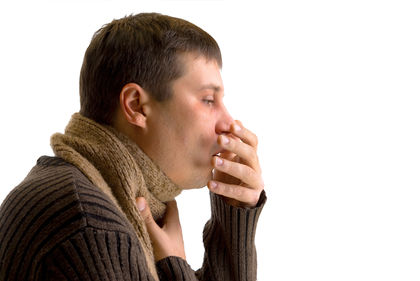
Tuberculosis (pronounced too-BUR-kyoo-LOH-siss), or TB, is a contagious disease of the lungs that can spread to other parts of the body and may be fatal. TB is caused by a microorganism known as the tubercle bacillus, or Mycobacterium tuberculosis. The disease can now be treated, cured, and prevented. However, scientists have never come closing to wiping it out and TB remains one of the most serious diseases worldwide.
Some parts of the population are at higher risk of getting TB than others. For instance, tuberculosis is more common among elderly people. Typically, more than one-fourth of the TB cases reported in the United States occur among people above age sixty-five.
Elderly people are especially vulnerable for a number of reasons. First, the disease can take years to become active, so an older person may have gotten the disease earlier in life and only discovered it after it became active. Second, people who live in nursing homes and similar facilities are often in close contact with each other and the disease can spread more easily in such conditions. Third, the body's immune system becomes weaker as a person grows older and older people may find it more difficult to hold off an attack of the tubercle bacillus. The immune system is the body's network system for fighting off disease and infection.
Race also can be a factor in determining the risk of getting tuberculosis. TB occurs most commonly among African Americans. Other minorities are also at higher risk. Currently about two-thirds of all TB cases in the United States affect African Americans, Hispanics, Asians, and people from the Pacific Islands. Another one-fourth of cases in the United States affect people born outside the country.
People who are infected with the human immunodeficiency virus (HIV) are also at high risk for tuberculosis (see AIDS entry). HIV can damage a person's immune system, making it difficult for the body to fight off the TB bacterium. People who abuse alcohol and illegal drugs are also at high risk for the disease.
The most common method by which TB is transmitted is coughing or sneezing. When a person coughs or sneezes, he or she releases a fine mist of water droplets. If the person carries the tubercle bacillus, those droplets may contain thousands of the bacteria. A person nearby may inhale those water droplets and the bacteria they contain. The bacteria can then travel to that person's respiratory system and cause a new infection.
About a third of the people standing close to a person with TB are likely to develop the disease. Tuberculosis is not transmitted by contact with a person's clothing, bed linens, or dishes and cooking utensils. A fetus may become infected, however, by taking in bacilli from the mother.
The tubercle bacilli a person inhales may or may not cause tuberculosis. The human immune system has a variety of ways to capture and kill these bacteria. If the immune system is successful in doing so, the person will not become ill with TB.
Inhaled bacilli, however, may survive the immune system. They may travel throughout the body to organs other than the lungs. In some cases, the bacilli remain active enough to cause tuberculosis. In about 5 percent of all cases, a person develops tuberculosis within twelve to twenty-four months of being exposed to TB bacteria.
By contrast, less than 10 percent of all people who inhale the tubercle bacillus actually become ill. The rest develop no symptoms of the disease and have negative X rays for the disease. In such cases, the disease is said to be inactive. The bacilli remain alive in cells, but they are not active enough to actually cause disease. They may become more active later in life, however.
In such cases, a person may become ill with tuberculosis long after being exposed to the TB bacteria.
Scientists believe that anywhere from ten to fifteen million Americans are carrying inactive tubercle bacilli in their bodies.
Cases of tuberculosis are often classified as to whether they occur in the lung (pulmonary tuberculosis) or elsewhere in the body (extrapulmonary tuberculosis). Pulmonary tuberculosis is often confused with other diseases of the respiratory system. A person with TB may feel slightly sick or develop a mild cough. The person may also cough up small amounts of greenish or yellow sputum in the morning; the sputum can sometimes contain blood.
Other symptoms include a low-grade fever, a loss of interest in food, mild chest pain, difficulty in breathing, and night sweats. If the TB bacilli travel from the lungs to the lymph nodes, which help fight off illness, other symptoms, such as skin infections, may develop. More serious symptoms can also develop, including severe weight loss. Modern antibiotics, however, can prevent patients from reaching that stage of the disease.
In the mid-seventeenth and eighteenth centuries, many countries underwent an Industrial Revolution. Because of inventions such as the steam engine, cities saw an increase of factory and industrial jobs, and more and more people moved from farms in the country to work in the city. Once there, workers often lived in very close contact with relatives and neighbors. Under those crowded and unsanitary conditions, tuberculosis was able to spread easily among the population.
Before scientists knew what caused tuberculosis, the disease was commonly referred to as consumption.
Until recently, there was no way of treating the disease. Instead, people with "consumption" were isolated in private hospitals or sanitariums. The purpose of isolation was to prevent the disease from spreading to uninfected people. Because of this practice, the study of tuberculosis also became separated from other fields of medicines. Entire organizations were created to study the disease, its effects on patients, and its impact on society as a whole.
In 1885 the German microbiologist Robert Koch discovered the tubercle bacillus and showed that this microorganism was responsible for tuberculosis. At the time, TB was responsible for one out of every seven deaths that occurred in Europe.
At the turn of the twentieth century, more than 80 percent of all Americans had been infected with TB before the age of twenty. Most of these people did not become ill since their bodies were able to fight off the disease. However, tuberculosis was still the most common cause of death among Americans. Even as late as 1938 there were more than seven hundred TB hospitals in the United States.
The first step in the conquest of TB occurred with the discovery of streptomycin in the early 1940s. Streptomycin is an antibiotic that kills the tubercle bacillus. Eventually, a number of other anti-tuberculosisdrugs were developed and progress was made in overcoming the disease.
By 1985 a conference was held to develop plans to eliminate tuberculosis forever. The number of cases of TB had been dropping for many years and many experts thought that TB was no longer going to be a serious disease. Then, in the late 1980s, the number of TB cases began to rise, both in the United States and around the world. Why did this change come about? At least five factors are thought to play a role in the return of TB as a major health problem:
Experts estimate that eight to ten million new cases of tuberculosis develop worldwide every year. The disease is thought to be responsible for about three million deaths annually. While there are various ways to fight the disease, if root problems, such as homelessness, poverty, drug use, and drug resistance are not solved, tuberculosis may once again become a major health problem.
Some of the tissues and organs in which extrapulmonary tuberculosis may appear are the following:
The first sign of tuberculosis may be the presence of one or more of the symptoms described. For example, someone who experiences persistent cold-like systems might seek medical advice. In such cases, a medical worker can take samples of a person's sputum. The sputum can then be cultured (grown and studied) to look for tubercle bacilli. Standard chemical tests are available for the detection of these bacilli.
Body fluids other than sputum can also be collected and cultured. For example, studies of the urine will indicate whether the kidneys or bladder have been infected.
Perhaps the most common warning sign for tuberculosis is an abnormal chest X ray. The X ray of a person with pulmonary tuberculosis will show numerous white, irregular areas against a dark background and/or enlarged lymph nodes. Chest X rays are recommended for anyone who has close contact with a TB patient. For example, health care workers who have contact with people at risk for the disease should have regular chest X rays.
The most common method for diagnosing TB has traditionally been a tuberculin skin test. Tuberculin consists of antigens, substances produced by an M. tuberculosis culture. In a tuberculin skin test, these antigens are injected beneath the skin. If TB bacteria are present, the injection becomes hard, swollen, and red within one to three days. This change is generally a good indication that infection has occurred.
Today, skin tests generally use a substance called purified protein derivative (PPD). The PPD test, also called the Mantoux test, tends to provide more accurate results than the traditional tuberculin test. However, both false positives and false negatives do occur. A false positive is a test that suggests infection has occurred when it really has not. A false negative is a test that shows that no infection has occurred when, in fact, it actually has.
In the past, treatment of tuberculosis was primarily supportive. Patients were kept in isolation, away from the healthy population. They were encouraged to rest and to eat well. If these measures failed, surgery was used. Today, surgical procedures are used much less often. Instead, drug therapy has become the primary means of treatment. Patients with TB can now safely rest at home; they pose no threat to other members of the household.
Drugs provide the most effective treatment for TB patients. Three principles govern the use of drug treatment for tuberculosis:
Five drugs are used today to treat tuberculosis. They are isoniazid (also known as INH; pronounced eye-suh-NY-uh-zid, trade names Laniazid, Nydrazid); rifampin (pronounced ry-FAM-puhn, trade names Rifadin, Rimactane); pyrazinamide (pronounced pir-uh-ZIN-uh-mide, trade name Tebrazid); streptomycin (pronounced strep-tuh-MYS-uhn); and ethambutol (pronounced eth-AM-byoo-tol, trade name Myambutol). The first three drugs are often combined into a single capsule so that patients have fewer pills to take.
Surgery is sometimes used to treat tuberculosis when medication is not effective. One form of surgery involves the introduction of air into the chest. This procedure causes the lung to collapse. In a second procedure, one or more ribs may be removed. A third procedure involves the removal of all or part of a diseased lung. Other forms of surgery may be used in cases of extrapulmonary tuberculosis.
The prognosis for recovery from TB is good for most patients. The key to success is early diagnosis of the disease followed by a careful program of medication. The most serious form of tuberculosis, miliary tuberculosis, is still fatal in many cases, but it is seldom seen in developed countries today.
Probably the most important form of prevention is to reduce the over-crowded and unsanitary conditions in which many people live. This action reduces the risk of transmitting TB from infected to uninfected people.
The Bacillus Calmette-Guérin vaccine (BCG) is available for use against tuberculosis. A vaccine is a substance that causes the body's immune system to build up resistance to a particular disease. BCG is made from a type of mycobacterium that infects cattle. When injected into humans, it stimulates the immune system against M. tuberculosis. The vaccine, however, is more effective in some groups of people than in others. Scientists are conducting studies to better understand why the vaccine is not as effective in some parts of the population.
Isoniazid can be used to prevent the development of TB as well as to treat it. There is no point in giving the drug to everyone, however, since most people never come into contact with someone who has tuberculosis, so their risk of infection is small. However, some people encounter TB carriers often. These people can benefit from taking isoniazid on a regular basis. The treatment involves receiving a dose of isoniazid once every six to twelve months.
Among the groups that should consider the use of isoniazid as a preventative against TB are: health care workers who have contact with TB patients; people who are HIV positive; intravenous drug users; anyone who has had positive PPD results and abnormal chest X rays in the past; people with depressed immune systems; and members of high-risk groups who have had positive PPD tests.
Hyde, Margaret O. Know About Tuberculosis. New York: Walker & Company, 1994.
Landau, Elaine. Tuberculosis. New York: Franklin Watts, Inc., 1995.
Silverstein, Alvin, Virginia Silverstein, and Robert Silverstein. Tuberculosis. Hillside, NJ: Enslow Publishers, Inc., 1994.
National Institute of Allergy and Infectious Diseases. Building 31, Room 7A-50, 31 Center Drive, MSC 2520, Bethesda, MD 20892–2520. http://www.niaid.nih.gov.