
Malaria - Symptoms
A person infected with malaria passes through three stages of very distinctive symptoms. The first stage is characterized by uncontrollable shivering for an hour or two. In the next stage, the patient's temperature rises quickly. It may reach 106°F (41°C) for a period of up to six hours. In the third stage, the patient begins to sweat profusely, and his or her temperature drops rapidly.
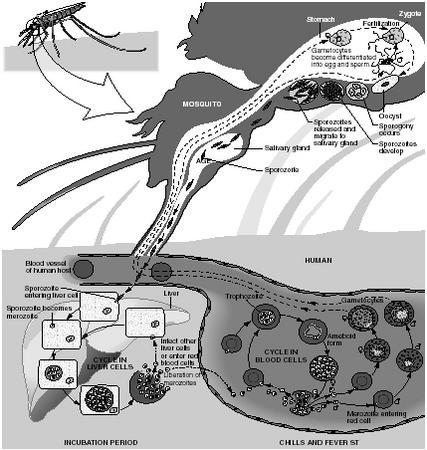
Other symptoms may accompany these stages. They include fatigue, severe headache, nausea, and vomiting. After the third stage, the patient often falls asleep from exhaustion.
The three stages are often repeated the following day, two days later, or at some later time. In many cases, a person experiences a repetition of the stages again and again during their lifetime. Some people go many years before the symptoms repeat.
The most serious forms of malaria can result in death in a matter of hours. The parasites attack a person's red blood cells and change their structure. The cells become very sticky and begin to clump together. As they do, they may block blood vessels in vital organs, such as the kidneys and spleen. These organs may no longer be able to function properly, and the patient may fall into a coma and die.
Comment about this article, ask questions, or add new information about this topic: